

Modernizing internal communications across 90+ decentralized retail locations required replacing a legacy intranet with a modern, cloud-based Omnia platform.
I spearheaded the end-to-end migration, directing a third-party development agency on UI/UX architecture while authoring comprehensive change-management training programs. The project streamlined network-wide communications and onboarded over 90 thrift shop managers and staff without operational disruption.
1. Project Discovery & Stakeholder Research
MCC Thrift migrated its enterprise intranet to Omnia to centralize operations and improve cross-departmental collaboration. Rather than imposing a top-down structure (MCC Thrift operates as a grassroots organization and relational capital is worth more than gold), I led a user-centered discovery phase to ensure the new architecture directly met operational needs across diverse teams:
Stakeholder Interviews: Conducted structured interviews with department heads, administrative staff, and frontline workers to uncover key pain points, redundant workflows, and critical data dependencies.
Conducted structured interviews with department heads, thrift shop managers, and frontline staff to uncover key pain points, redundant workflows, and critical data dependencies.
Audited legacy file stores and mapped daily user journeys to translate non-technical staff requests into functional system requirements.
Partnered directly with the external implementation agency, acting as the primary liaison to translate internal user needs into technical deliverables, manage timelines, and ensure the agency’s execution aligned with our organizational vision.
Balanced high-level security priorities with the practical, low-friction needs of daily users to build organizational buy-in before build-out began.
2. Technical Solution & Information Architecture
Using insights from stakeholder discovery, I designed and implemented a clear, scalable information hierarchy tailored to the organization’s workflows:
Designed directory hierarchies, permission groups, and file-tagging schemas within Omnia/SharePoint to reflect how teams actually retrieve information.
Mapped user roles to specific library access points to ensure data security without creating unnecessary workflow bottlenecks.
Authored core governance documentation covering asset storage, version control, and user provisioning.
3. Educational Content & Tutorial Production
To drive self-serve adoption and eliminate friction during roll-out, I authored a comprehensive suite of instructional resources:
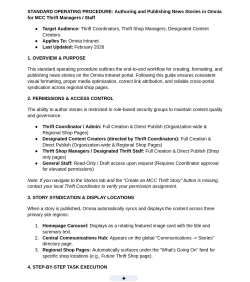
Authored concise hosted directly on the intranet knowledge base. Each guide followed a strict format:
- Prerequisites: System requirements and access permissions needed before starting.
- Step-by-Step Task Execution: Clear, numbered instructions paired with exact UI location names and visual cues.
- Edge Cases & Troubleshooting: A targeted section addressing common user errors (e.g., sync delays, permission issues).
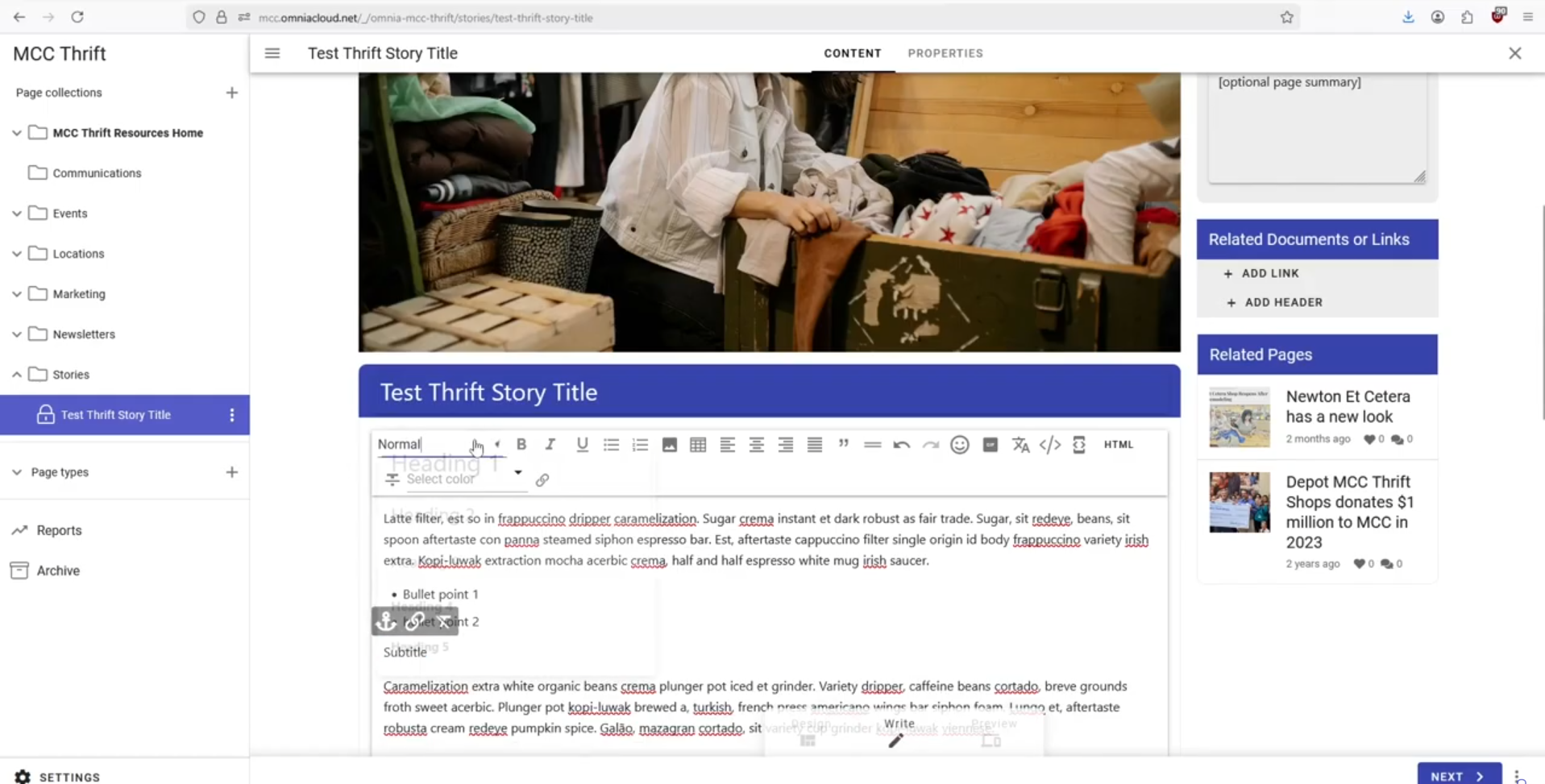
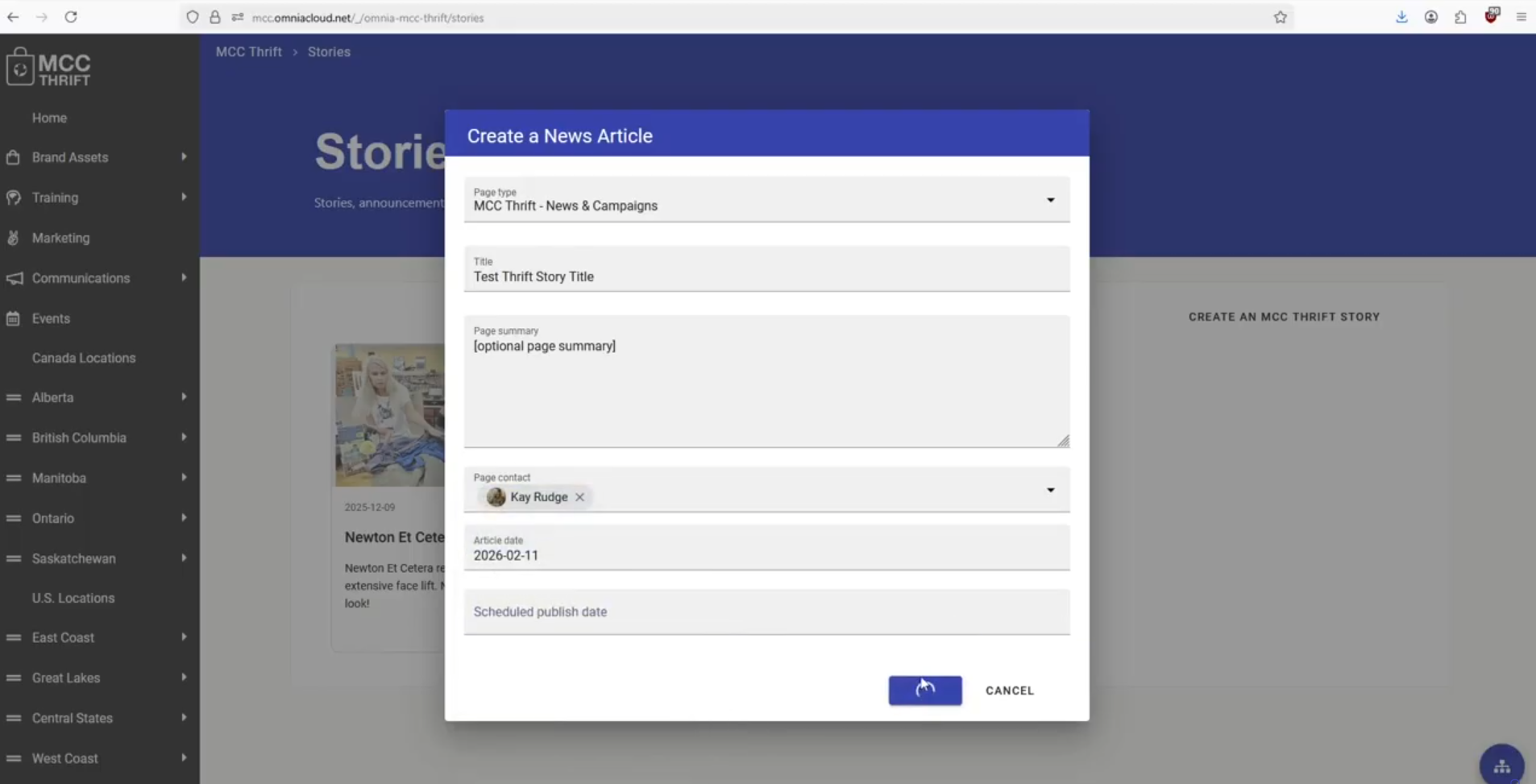
Translated complex workflow rules into bite-sized (1–3 minute) video walkthroughs.
- Scriptwriting: Drafted tight, precise narration focusing exclusively on action-oriented steps ("Click X to achieve Y").
- Screen Recording & Production: Recorded step-by-step UI actions with high-contrast callouts to reinforce key technical steps.
- Index & Searchability: Provided timestamped chapter markers and full-text transcripts alongside each video to optimize accessibility and search indexing.
Key Outcomes
Built a system directly aligned with real user needs, resulting in immediate organizational adoption across departments.
Decreased internal IT and admin inquiries regarding file recovery and access issues through clear, self-serve troubleshooting docs.
Established a repeatable, self-paced training hub that automates onboarding for new staff and volunteers.
Overcoming the obstacle of a more uniform brand identity at a shop level by providing simple access to approved/up-to-date files for use.
Addressing the challenge that managers find marketing, branding, and accessing proper HR/Financial documents too time-consuming. Providing for them a searchable database and an easily organized structure to find these time-critical documents and forms for use.